



 Theme - Default
Tuesday, 15 July 2025 00:00
Ingrown Toenails
An ingrown toenail is a nail that has curved downward and grown into the skin. This typically occurs at either the nail borders or the sides of the nail. As a result, pain, redness, swelling, and warmth may occur in the toe. If a break in the skin forms due to the ingrown nail, bacteria may enter and cause an infection in the area; this is typically characterized by a foul odor and drainage.
Ingrown toenails have multiple reasons for developing. In many instances, the condition is a result of genetics and is inherited. The most common cause, however, is improper trimming; cutting the toenails too short forces the skin beside the nail to fold over. An ingrown toenail can also develop due to trauma, such as stubbing the toe, having an object fall on the toe, or participating in activities that involve repeated kicking or running. Wearing shoes that are too tight or too short can also cause ingrown toenails.
Treatment for an ingrown toenail varies between patients and the severity of the condition. In most cases, it is best to see your podiatrist for thorough and proper treatment. After examining your toe, your podiatrist may prescribe oral antibiotics to clear the infection if one is present. Surgical removal of either a portion of the nail or the entire nail may also be considered. In some cases, complete removal or destruction of the nail root may be required. Most patients who undergo nail surgery experience minimal pain afterward and can return to normal activity the following day.
Ingrown toenails can be prevented with proper nail trimming and by avoiding improper-fitting shoes. When cutting the toenails, be sure that you are cutting in a straight line and avoid cutting them too short. Shoes should not be too short or tight in the toe box.
Published in Featured
Tagged under
Tuesday, 08 July 2025 00:00
Early Clues That Arthritis May Be Affecting Your Feet


Arthritis often begins with subtle changes in the feet that may be easy to overlook. One of the earliest signs is stiffness, particularly in the morning or after periods of rest. This stiffness may be accompanied by mild swelling or tenderness in the joints of the toes or midfoot. Some people notice a gradual loss of flexibility or difficulty walking comfortably. Redness or warmth surrounding the joint may also develop as inflammation progresses. Over time, everyday activities such as climbing stairs or standing for long periods of time may become more difficult. Pain that increases with activity and eases with rest can also suggest the beginning of arthritis. Identifying these early symptoms is important for managing the condition before it worsens. If you are noticing changes in how your feet feel or function, it is suggested that you schedule an appointment with a podiatrist for a diagnosis and appropriate treatment.
Arthritis can be a difficult condition to live with. If you are seeking treatment, contact Brian D. Jackson, DPM from Neuhaus Foot and Ankle. Our doctor can provide the care you need to keep you pain-free and on your feet.
Arthritic Foot Care
Arthritis is a joint disorder that involves the inflammation of different joints in your body, such as those in your feet. Arthritis is often caused by a degenerative joint disease and causes mild to severe pain in all affected areas. In addition to this, swelling and stiffness in the affected joints can also be a common symptom of arthritis.
In many cases, wearing ill-fitting shoes can worsen the effects and pain of arthritis. Wearing shoes that have a lower heel and extra room can help your feet feel more comfortable. In cases of rheumatoid arthritis, the arch in your foot may become problematic. Buying shoes with proper arch support that contour to your feet can help immensely.
Alleviating Arthritic Pain
- Exercises that stretch the foot can prevent further pain and injury and increase mobility
- Most of the pain can be alleviated with anti-inflammatory drugs, heat, and topical medications
- Massages can help temporarily alleviate pain.
It is best to see your doctor for the treatment that is right for your needs and symptoms. Conditions vary, and a podiatrist can help you determine the right method of care for your feet.
If you have any questions please feel free to contact one of our offices located in Columbia and Pulaski, TN . We offer the newest diagnostic tools and technology to treat your foot and ankle needs.
Published in Blog
Tagged under
Tuesday, 08 July 2025 00:00
Arthritic Foot Care
During your lifetime, you will probably walk about 75,000 miles, which is quite a lot of stress to put on your feet. As you get older, the 26 bones and 30 joints in each of your feet will lose flexibility and elasticity. Your foot’s natural shock absorbers will wear down as well. Having arthritis added to this mix only makes matters worse. Your joints will become distorted and inflamed, which is why arthritic foot care needs to be something to think about every day.
When dealing with arthritis, having additional foot complications, such as bunions, hammertoes, or neuroma, can be a serious detriment. To avoid these, buy well-fitting shoes with a lower heel and good support. Arthritis causes you to lose your arch, so having shoes with good arch support is also highly recommended.
Aside from getting good arch support, the shoes need to fit comfortably and properly as well. A good place to start is by leaving a finger width between the back of the shoe and your foot to gauge proper size. It is also helpful to have a square or rounded toe box in the front to provide even more comfort. Another thing to look for is a rubber sole that can provide a cushion and absorb shock as you walk. This adds flexibility to the ball of your foot when you push off your heel to walk.
Exercise is another key aspect of arthritic foot care. Exercise not only strengthens and stretches your muscles and joints, but helps to prevent further injury and pain as well. Stretching the Achilles tendon, the tendon located in the back of your heel, will give you added mobility and reduce pain due to stress. Another thing you can do is massage your feet, kneading the ball of your foot as well as your toes from top to bottom.
Stretching the Achilles tendon is a simple exercise that you can do at home anytime. Lean against the wall with your palms flat against the surface while placing one foot forward, towards the wall, and one foot behind you. Bend your forward knee towards the wall while keeping your back knee locked straight, and make sure both your heels are completely touching the ground at all times. This will stretch your Achilles tendon and calf muscles as well. You will feel the stretch almost immediately. You can also stretch your toes in a couple ways. One involves taking a rubber band and wrapping it around both your big toes while your heels remain together. Then, pull them apart to stretch your big toe. You can also place a rubber band around all the toes of one of your feet. Then, try to separate each individual toe, stretching them all.
A final step you can take to help your arthritis is taking non-steroid, non-inflammatory drugs or topical medicines with capsaicin. Unfortunately, there is no complete way to remove all of your arthritic pain. However, following some of this advice can go a long way in staying as pain-free as possible.
Published in Featured
Tagged under
Friday, 04 July 2025 00:00
Are You Suffering From Ingrown Toenails?


If left untreated, an ingrown toenail can lead to more serious concerns, such as an infection. Knowing proper nail care can help in the prevention of an ingrown toenail. Give us a call, and get treated!
Published in Blog
Tagged under
Tuesday, 01 July 2025 00:00
How Shoes Should Fit to Support Foot Health


Wearing shoes that fit properly is essential for keeping feet comfortable and preventing injury. A well-fitting shoe allows enough space at the front so toes can move freely without rubbing. There should be about a thumb’s width between the longest toe and the end of the shoe. The heel should sit securely without slipping, and the sides should feel snug, but not tight. Arch support should match the shape of your foot to help with balance and reduce strain. Shoes that are too tight can increase the risk of blisters, bunions, or ingrown toenails, while shoes that are too loose may cause instability or falls. Measuring both feet and trying on shoes at the end of the day, when feet are slightly swollen, can help ensure the best fit. If you have developed foot pain from wearing shoes that do not fit correctly, or have concerns about your shoe fit or foot comfort, it is suggested that you consult a podiatrist for expert advice.
Getting the right shoe size is an important part of proper foot health. Seek the assistance of Brian D. Jackson, DPM from Neuhaus Foot and Ankle. Our doctor will provide the care you need to keep you pain-free and on your feet.
Getting the Right Shoe Size
There are many people who wear shoes that are the incorrect size, negatively affecting their feet and posture. Selecting the right shoes is not a difficult process, so long as you keep several things in mind when it comes to choosing the right pair.
- When visiting the shoe store, use the tools available to measure your foot.
- Be sure there is ‘wiggle room’. There should be about an inch between your toes and the tip of your shoes.
- Do not always assume you are the same size, as manufacturers run differently.
- Purchase shoes later in the day, as your feet swell as the day progresses.
- If a shoe is not comfortable, it is not suitable. Most shoes can’t be ‘broken in’, and comfort should be the ultimate goal when it comes to choosing the right pair of shoes
As our feet hold our body weight and keep us moving, it is important to treat them right. Picking the right pair of shoes can provide your feet comfort and mobility without pain.
If you have any questions, please feel free to contact one of our offices located in Columbia and Pulaski, TN . We offer the newest diagnostic and treatment technologies for all your foot care needs.
Published in Blog
Tagged under
Tuesday, 01 July 2025 00:00
Getting the Right Shoe Size
If you want to ensure the long-term health of your feet, you should choose the right pair of shoes to wear on an everyday basis. Poorly fitting shoes will not only be uncomfortable, but they may also cause foot pain and unwanted foot conditions. When looking for a new pair of shoes, there are certain factors you should look for.
One of the most crucial tips you can follow is to always try shoes on in the afternoon. It is normal for feet to swell throughout the day, which means your shoe size may be different in the morning compared to what it is at night. To be safe, you should go with the slightly bigger size to ensure that your feet have enough room within your shoes.
Another rule is to never buy shoes that are too tight (Many people buy shoes that are too tight for their feet and expect the shoes to stretch out). If you are looking for a pair of running sneakers, you can go to a specialty running shoe store to have your feet properly sized. When you purchase shoes in-store, walk around in them to make sure the shoes you are going to buy fit you properly. Take some time to make sure the shoes are comfortable for your feet
The upper section of your shoe should be made from a softer, more flexible material. The material that makes up the shoe should not be slippery. Arch support should be a key factor in the decision-making process for shoes. Arch support is crucial because it will prevent the arches in your feet from collapsing. If your arches collapse, the plantar fascia may begin to stretch out which could lead to plantar fasciitis.
Many problematic foot conditions may be prevented by wearing properly fitting shoes. Some of these unwanted conditions are bunions, corns, calluses, pain, stress fractures, and plantar fasciitis. If you are suffering from any of these ailments you may want to speak with your podiatrist.
Published in Featured
Tagged under
Tuesday, 24 June 2025 00:00
How High Heels Affect Foot Health

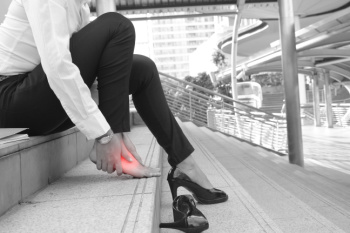
Wearing high heels regularly can lead to a range of foot and ankle problems. The forward pitch of the foot in high heels places significant pressure on the forefoot, often leading to bunions, hammertoes, corns, and neuromas. Prolonged wearing of high heels can also contribute to plantar fasciitis, a painful condition involving the tissue on the bottom of the foot. High heels limit ankle mobility, which increases strain on the Achilles tendon and calf muscles. Over time, this can shorten and tighten the tendon, raising the risk of tendon tears and muscle cramping. The altered posture caused by high heels shifts the body's alignment and places extra stress on the ankle joints, leading to pain or instability. A podiatrist can assess the impact of wearing high heels on foot structure, recommend custom inserts, and determine whether surgery is needed for long-term problems. If you are experiencing foot or ankle pain from wearing high heels, it is suggested that you schedule an appointment with a podiatrist for an exam and appropriate treatment options.
High heels have a history of causing foot and ankle problems. If you have any concerns about your feet or ankles, contact Brian D. Jackson, DPM from Neuhaus Foot and Ankle. Our doctor can provide the care you need to keep you pain-free and on your feet.
Effects of High Heels on the Feet
High heels are popular shoes among women because of their many styles and societal appeal. Despite this, high heels can still cause many health problems if worn too frequently.
Which Parts of My Body Will Be Affected by High Heels?
- Ankle Joints
- Achilles Tendon – May shorten and stiffen with prolonged wear
- Balls of the Feet
- Knees – Heels cause the knees to bend constantly, creating stress on them
- Back – They decrease the spine’s ability to absorb shock, which may lead to back pain. The vertebrae of the lower back may compress.
What Kinds of Foot Problems Can Develop from Wearing High Heels?
- Corns
- Calluses
- Hammertoe
- Bunions
- Morton’s Neuroma
- Plantar Fasciitis
How Can I Still Wear High Heels and Maintain Foot Health?
If you want to wear high heeled shoes, make sure that you are not wearing them every day, as this will help prevent long term physical problems. Try wearing thicker heels as opposed to stilettos to distribute weight more evenly across the feet. Always make sure you are wearing the proper shoes for the right occasion, such as sneakers for exercising. If you walk to work, try carrying your heels with you and changing into them once you arrive at work. Adding inserts to your heels can help cushion your feet and absorb shock. Full foot inserts or metatarsal pads are available.
If you have any questions, please feel free to contact one of our offices located in Columbia and Pulaski, TN . We offer the newest diagnostic and treatment technologies for all your foot care needs.
Published in Blog
Tagged under
Tuesday, 24 June 2025 00:00
Effect of High Heels on the Feet
For hundreds of years, women have been wearing various kinds of high heels for aesthetic reasons. Women who wear high heels appear to be taller and have longer and thinner legs, and the wearer’s gait and posture changes. Though high heels have had an association with femininity and have kept them popular over the years, there are definite health problems caused by wearing them too frequently.
The motion of the ankle joints is limited when heels are worn. The ankle joint is very important to the body when it comes to walking. Because of their location, these joints have a great deal of weight put on them. Thus, it is very important to keep them as healthy as possible. The Achilles tendon is the main tendon in the ankle. Wearing high heels too often, studies have shown, can cause the calf muscle and Achilles tendon to shorten and stiffen. This can cause problems when shoes without heels are worn.
By putting a great deal of pressure on the ball of the foot and by forcing the toes into a small toe box, high heels can cause or may worsen many foot problems. These include corns, hammertoe, bunions, Morton’s neuroma and plantar fasciitis.
Not only does wearing high heels regularly have negative effects on the feet, the rest of the body can suffer as well. The knees, one of the most important joints in the entire body, can be affected by wearing high heels. High heels can cause the knees to stay bent all the time. Also, it can cause them to bend slightly inward as well. Doctors believe that women can suffer from osteoarthritis later in life because of constantly walking like in high heels. By limiting the natural motion of the foot during walking, high heels also cause an increased in stress on the knees.
Similarly, high heels can cause the back to go out of alignment. If high heels are worn constantly, the spine’s ability to absorb shock can cause continued back pain. They can compress the vertebrae of the lower back, and can overuse the back muscles.
However, this is not to say that high heels can never be worn. If worn occasionally and not often, they will not cause serious problems. They should not be worn every day. It’s important to wear them modestly to avoid the long-term physical health problems of the feet, knees, ankles, and back mentioned above.
Published in Featured
Tagged under
Tuesday, 17 June 2025 00:00
Causes of Ankle Pain While Walking


Ankle pain when walking can result from injuries, overuse, or underlying conditions that affect the foot and ankle structure. Common causes include sprains, which involve stretched or torn ligaments, and fractures, where one or more ankle bones break and may shift out of place. Overuse injuries such as tendonitis, bursitis, and plantar fasciitis often develop gradually and worsen with continued walking. Conditions like arthritis, gout, or posterior tibial tendon dysfunction can also cause ankle pain, stiffness, and reduced mobility. A podiatrist can perform a thorough physical exam, review your medical history, and use diagnostic tools such as X-rays or MRI scans to identify the source of ankle pain. Treatment options include supportive bracing, shoe modifications, and injections. In some cases, surgery may be needed to repair damaged tendons, realign bones, or even replace the ankle joint. If you are experiencing pain while walking, it is suggested that you schedule an appointment with a podiatrist for a diagnosis and appropriate treatment.
Ankle pain can be caused by a number of problems and may be potentially serious. If you have ankle pain, consult with Brian D. Jackson, DPM from Neuhaus Foot and Ankle. Our doctor will assess your condition and provide you with quality foot and ankle treatment.
Ankle pain is any condition that causes pain in the ankle. Due to the fact that the ankle consists of tendons, muscles, bones, and ligaments, ankle pain can come from a number of different conditions.
Causes
The most common causes of ankle pain include:
- Types of arthritis (rheumatoid, osteoarthritis, and gout)
- Ankle sprains
- Broken ankles
- Achilles tendonitis
- Achilles tendon rupture
- Stress fractures
- Bursitis
- Tarsal tunnel syndrome
- Plantar fasciitis
Symptoms
Symptoms of ankle injury vary based upon the condition. Pain may include general pain and discomfort, swelling, aching, redness, bruising, burning or stabbing sensations, and/or loss of sensation.
Diagnosis
Due to the wide variety of potential causes of ankle pain, podiatrists will utilize a number of different methods to properly diagnose ankle pain. This can include asking for personal and family medical histories and of any recent injuries. Further diagnosis may include sensation tests, a physical examination, and potentially x-rays or other imaging tests.
Treatment
Just as the range of causes varies widely, so do treatments. Some more common treatments are rest, ice packs, keeping pressure off the foot, orthotics and braces, medication for inflammation and pain, and surgery.
If you have any questions please feel free to contact one of our offices located in Columbia and Pulaski, TN . We offer the newest diagnostic tools and technology to treat your foot and ankle needs.
Published in Blog
Tagged under
Tuesday, 17 June 2025 00:00
Ankle Pain
Pain experienced in the ankle can be caused by a multitude of conditions. While the most common cause is an ankle sprain, other possible problems can include arthritis, gout, ankle instability, an ankle fracture, nerve compression, or tendinitis. In more serious cases, ankle pain can be a sign of improper alignment of the foot or an infection.
Ankle pain can often be accompanied by symptoms such as redness, swelling, stiffness, and warmth in the affected area. Pain can be described differently depending on the condition: short, stabbing pain and a dull ache are some examples. If such symptoms are persistent and do not improve after time, be sure to schedule an appointment with your local podiatrist.
Depending on the condition causing your ankle pain, different treatments may be prescribed by your podiatrist. For ankle sprains, the first step in treatment involves rest, ice, elevation, and compression. Be sure to avoid placing pressure on the ankle, use an ice pack several times a day, and use a compression bandage and elevation to reduce swelling. Other, more serious conditions may require the assistance of certain drugs and medications such as nonsteroidal anti-inflammatory drugs (NSAIDs), physical therapy, or even cortisone injections.
Depending on the severity of your ankle pain and the condition behind it, recovery from ankle pain may take some time.
Consult with your foot and ankle specialist to best determine the cause of your ankle pain and the appropriate treatment.
Published in Featured
Tagged under