



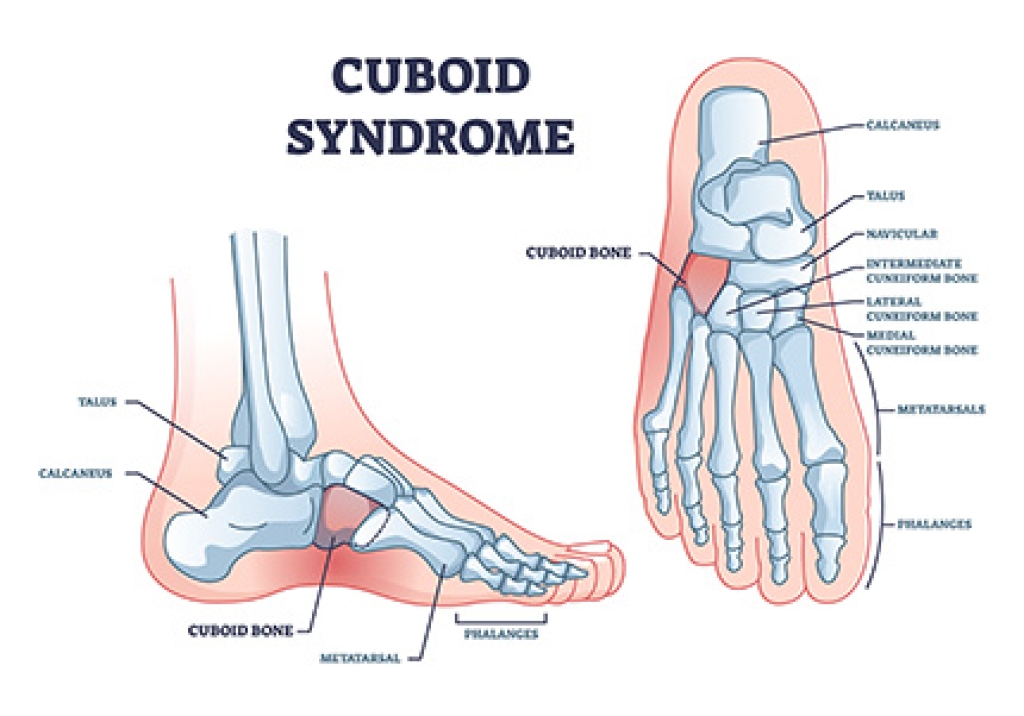
Cuboid syndrome develops when the cuboid bone and nearby joint in the foot move out of their normal position or become irritated. The cuboid is a small bone located on the outer side of the foot near the ankle. Pain from cuboid syndrome is usually felt along the outside of the foot. The area can also become tender or swollen. Some patients notice weakness in the foot or difficulty moving it normally. Pain can become worse when standing or placing weight on the affected foot.
An ankle injury can lead to cuboid syndrome, especially when the ankle rolls inward. Repetitive stress can also irritate the area. Activities that place repeated pressure on the feet, like running or dancing, can increase the risk. Foot structure can also play a role. People with flat feet can be more likely to develop cuboid syndrome because changes in foot mechanics can place extra stress on the cuboid area. Wearing shoes that are too tight can also contribute to foot problems. Because symptoms can resemble other injuries, determining the exact source of outer-foot pain is important.
A podiatrist can examine the foot to determine whether the cuboid area is causing the pain. The evaluation can include checking tenderness, joint movement, and how the foot functions when weight is placed on it. A podiatrist can also assess foot structure and walking patterns that could contribute to repeated stress. Treatment can focus on restoring proper movement and reducing pressure on the painful area. Supportive devices can also help address foot mechanics that contribute to symptoms. An accurate diagnosis is important because fractures and other foot conditions can cause similar pain. If you have symptoms of cuboid syndrome, it is suggested that you schedule an appointment with a podiatrist for a diagnosis and appropriate treatment.
Cuboid syndrome, also known as cuboid subluxation, occurs when the joints and ligaments near the cuboid bone in the foot become torn. If you have cuboid syndrome, consult with Brian D. Jackson, DPM from Neuhaus Foot and Ankle. Our doctor will assess your condition and provide you with quality foot and ankle treatment.
Cuboid syndrome is a common cause of lateral foot pain, which is pain on the outside of the foot. The condition may happen suddenly due to an ankle sprain, or it may develop slowly overtime from repetitive tension through the bone and surrounding structures.
Causes
The most common causes of cuboid syndrome include:
- Injury – The most common cause of this ailment is an ankle sprain.
- Repetitive Strain – Tension placed through the peroneus longus muscle from repetitive activities such as jumping and running may cause excessive traction on the bone causing it to sublux.
- Altered Foot Biomechanics – Most people suffering from cuboid subluxation have flat feet.
Symptoms
A common symptom of cuboid syndrome is pain along the outside of the foot which can be felt in the ankle and toes. This pain may create walking difficulties and may cause those with the condition to walk with a limp.
Diagnosis
Diagnosis of cuboid syndrome is often difficult, and it is often misdiagnosed. X-rays, MRIs and CT scans often fail to properly show the cuboid subluxation. Although there isn’t a specific test used to diagnose cuboid syndrome, your podiatrist will usually check if pain is felt while pressing firmly on the cuboid bone of your foot.
Treatment
Just as the range of causes varies widely, so do treatments. Some more common treatments are ice therapy, rest, exercise, taping, and orthotics.
If you have any questions, please feel free to contact one of our offices located in Columbia and Pulaski, TN . We offer the newest diagnostic and treatment technologies for all your foot care needs.