



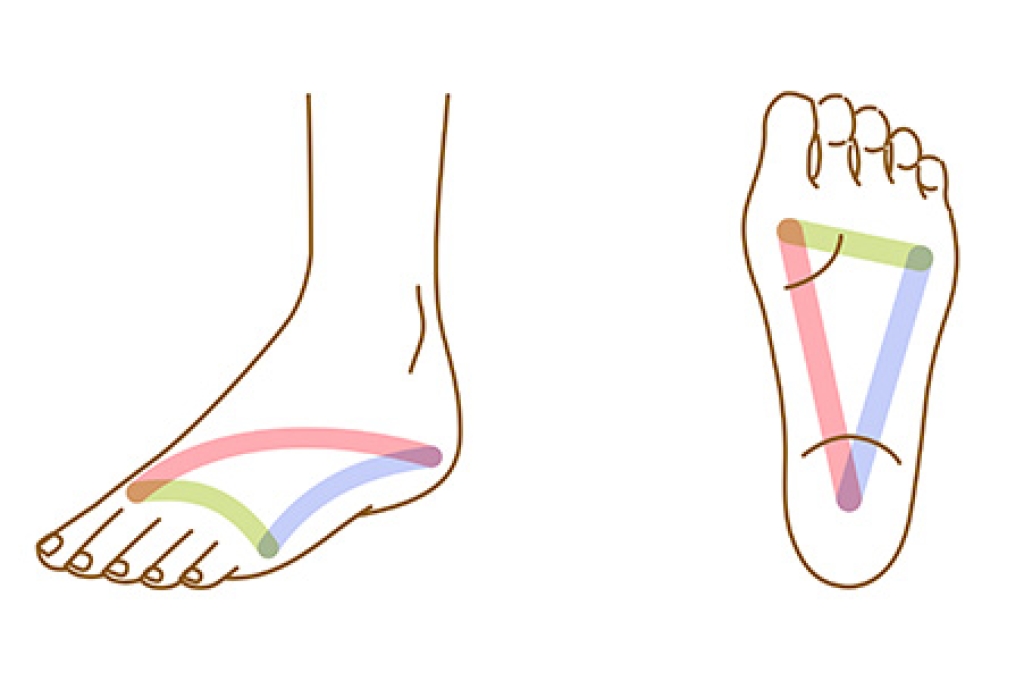
The curve along the inside of your foot does more than shape your footprint. It helps support body weight and manage the forces of each step. Foot arch types generally fall into three groups based on this curve. They include medium, low, and high arches. These categories describe arch height rather than the separate anatomical arches within each foot. Muscles and tendons work with bones and ligaments to maintain the foot’s structure. Arch height alone does not determine foot health. A podiatrist also considers flexibility and movement to understand whether a particular foot shape contributes to discomfort.
A medium arch leaves a visible curve along the inner foot when standing. This foot type generally allows the foot to absorb impact and become firmer as the body pushes forward. However, a medium arch does not guarantee freedom from foot problems. Low arches bring more of the sole toward the ground. Some people have flexible flat feet, with an arch that appears when sitting but lowers when standing. Others have a rigid flat foot. Many people with low arches experience no pain. A newly flattened arch, especially with inner ankle pain, sometimes signals damage to a supporting tendon.
High arches create a more pronounced curve that remains visible when standing. This shape sometimes concentrates pressure beneath the heel and ball of the foot. A stiff, high-arched foot absorbs impact less effectively, which places added stress on these areas. Patients sometimes develop painful calluses or feel unsteady while walking. Repeated ankle sprains also warrant attention. High arches sometimes reflect an inherited foot shape, but certain nerve or muscle disorders also cause them. A podiatrist checks muscle strength and sensation when examining this foot type. Changes in arch height may be evaluated, particularly when accompanied by weakness or difficulty lifting the foot.
A podiatrist determines arch type by examining the feet while the patient is seated, standing, and walking. The examination includes checking joint movement and locating tender areas. X-rays help assess bone alignment when symptoms suggest a structural problem. Treatment addresses the cause of pain rather than arch appearance alone. Custom orthotics, which are specially designed shoe inserts, help redistribute pressure and support foot function. A podiatrist may also prescribe braces for certain painful or unstable feet. Follow-up visits help assess comfort and allow the podiatrist to adjust the treatment plan, as needed. If you have pain in the arch of the foot, it is suggested that you schedule an appointment with a podiatrist for a diagnosis and appropriate treatment.
If you have any concerns about your feet, contact Brian D. Jackson, DPM from Neuhaus Foot and Ankle. Our doctor can provide the care you need to keep you pain-free and on your feet.
Biomechanics in Podiatry
Podiatric biomechanics is a particular sector of specialty podiatry with licensed practitioners who are trained to diagnose and treat conditions affecting the foot, ankle and lower leg. Biomechanics deals with the forces that act against the body, causing an interference with the biological structures. It focuses on the movement of the ankle, the foot and the forces that interact with them.
A History of Biomechanics
- Biomechanics dates back to the BC era in Egypt where evidence of professional foot care has been recorded.
- In 1974, biomechanics gained a higher profile from the studies of Merton Root, who claimed that by changing or controlling the forces between the ankle and the foot, corrections or conditions could be implemented to gain strength and coordination in the area.
Modern technological improvements are based on past theories and therapeutic processes that provide a better understanding of podiatric concepts for biomechanics. Computers can provide accurate information about the forces and patterns of the feet and lower legs.
Understanding biomechanics of the feet can help improve and eliminate pain, stopping further stress to the foot.
If you have any questions please feel free to contact one of our offices located in Columbia and Pulaski, TN . We offer the newest diagnostic and treatment technologies for all your foot and ankle needs.